图像


What is your current occupation?
I am an Ecological Restoration and Mitigation Project Manager at Resource Environmental Solutions (RES), the largest natural solutions company in the United States.
Please briefly introduce yourself.
I was born and raised in Richmond, Virginia, and still live here. It's 100 miles from the ocean, 100 miles from the mountains, and within the Chesapeake Bay watershed. So, we get to go fishing, hiking, and visit all sorts of great places.
What is your area of expertise?
Aquatic ecology applied to stream and wetland restoration, including water quality, hydrology, and stream ecology.
What is your main motivation for doing this work?
Seeing a restored wetland or stream improve over time, with vegetation maturing and wildlife returning—that sense of satisfaction is my main motivation.
What do you consider your greatest achievement?
I had the opportunity to work on one of the largest mitigation projects in U.S. history—the Bois d'Arc Reservoir Project in Texas. For this project, RES restored 15,000 acres of Riverbend Ranch from ranchland and farmland to wetlands, streams, forests, and grasslands.
What goals are you striving to achieve in the future?
My goal is to continue modernizing restoration and mitigation monitoring through the adoption of technologies like real-time sensors, drone imagery, and biological sampling.
Have you ever wondered what the name "HOBO" means?
Never thought about it. What does it mean?
What HOBO monitoring products do you use regularly?
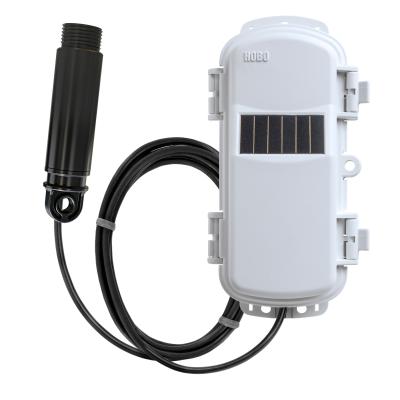
For all wetland and stream mitigation projects, RES is required to install monitoring wells and stream stage gauges to monitor hydrology. Traditionally, we use HOBO data loggers, such as the HOBO U20 Water Level Logger, installing up to 1,000 units annually across our projects nationwide. Currently, we are transitioning to using Onset's real-time sensors for all mitigation monitoring as well as other types of restoration projects.
Please describe a specific project where HOBO data loggers played a key role.
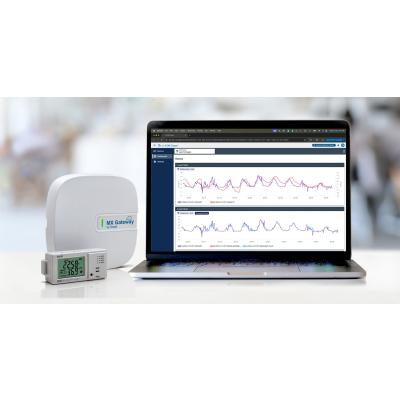
RES recently partnered with Onset to accelerate the development of its real-time water level sensor, a core component of the HOBOnet Remote Water Level Monitoring System. RES had been independently developing real-time sensors for five years, investing in multiple startups and funding university research. The technology was quite complex, and we ultimately realized we should move forward based on our existing relationship with Onset (since we already purchase approximately 1,000 HOBO data loggers annually). We held numerous collaboration meetings, provided market research, and tested several prototypes. The real-time water level sensor launched in late 2023, and RES is deploying it across the United States. We believe this system will allow RES to save up to 75% on monitoring labor and travel costs, enabling us to reallocate staff to more productive data analysis work rather than data collection.
What do you consider the most important feature of HOBO products?
Given my involvement with the real-time water level monitoring system, that stands out most in my mind. However, I wouldn't use HOBO products if I didn't trust their reliability. I've used other products and found high sensor failure rates. Reliable data is crucial for maintaining the trust of regulatory agencies that oversee wetland and stream mitigation projects. We can't jeopardize that trust with sensor failures or unreliable data.
Do you think accurate data helps you build a better tomorrow?
The real-time data RES collects through the HOBOnet remote system allows us to proactively manage restoration projects. Real-time data also reduces our need to travel to remote sites to download data, cutting the carbon footprint of monitoring by 75%—which is great news for a more sustainable future!