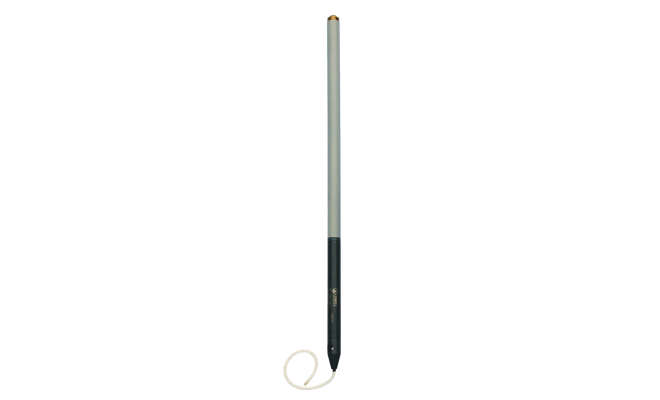


Tilt current meter from Lowell Instruments
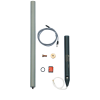
Full deployment kit tilt current meter
Scuba diver deploying a tilt meter data logger to measure current
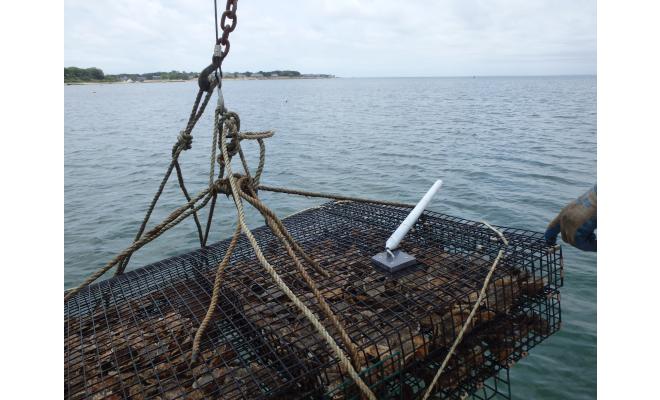
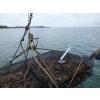
Tilt current meter on bow of boat before being deployed
Part Number -

TCM-1

洛厄尔仪器倾斜式流速计

测量高水流和低水流范围内的水流速度。

TCM-1倾斜式流速仪设计简约且成本较低,是在从内陆到大陆架边缘的多个地点测量水流速度的理想选择。

Important Information

需要Domino for Windows® 软件(免费下载)以及兼容的计算机。


获取报价
Overview

TCM-1 是测量从内陆到大陆架边缘水流速度的理想选择,其设计简单、成本较低,使得在多个位置同时测量水流成为可能。

这款倾斜式流速仪可通过简单添加或移除校准压载配重,在现场配置为低流速或高流速范围。对于持续低于 40 厘米/秒的低流速,建议使用压载垫圈。TCM-1 采用坚固的 PVC 外壳,无外部传感器,易于部署和回收。内置数据记录仪包括 USB 通信接口、microSD 闪存卡和长寿命锂电池。  

倾斜式流速仪的工作原理是什么?

TCM-1 倾斜式流速仪采用拖曳倾斜原理测量水流。数据记录仪具有浮力,通过短的柔性系绳锚定在水底。流动的水使数据记录仪向水流方向倾斜。该仪器使用三轴加速度计和三轴磁力计测量倾斜度和方位角,通过应用校准系数将所得的方位数据转换为水流速度。

Features
  • 300 meter depth rating
  • Measures water velocity for a fraction of the cost of an acoustic  meter
  • Tilt compensated compass for bearing measurements
  • Simple, rugged, low maintenance design
  • Seaweed snag-resistant
  • Change range in the field without software
  • 8 GB MicroSD memory card virtually eliminates memory concerns
  • Temperature sensor accurate to +/-0.1C
  • Lithium battery allows continuous 4Hz sampling for more than 1 year
  • USB 2.0 with standard cable and drag and drop data file offload
Specifications

速度(低速档带压载清洗器)

范围
0-40 厘米/秒
准确性
2厘米/秒 + 读数的3%
决议
0.1 厘米/秒

速度(高速范围带压载清洗器)

范围
0-80 厘米/秒
准确性
3厘米/秒 + 读数的3%
决议
0.1 厘米/秒

方向

范围
0-360°
准确性
5°(速度>5厘米/秒时)
决议
0.1度

温度

范围:-5至30°C
精度:0.1 °C
分辨率:<0.005 °C
范围:-20至-5,30至50°C
精度:0.2 °C
分辨率:<0.01 °C

电子学

记忆
8 GB microSDHC闪存卡(标准)
通信
全速USB micro-B接口
电池类型
数月到数年,取决于录制速率
内部时钟
每月误差小于1分钟

运行模式

开始和停止
在用户定义的时间启动和停止
连拍模式
按用户定义间隔的可变速率日志记录
录制速率
当前:64赫兹至每小时1个样本,典型设置为每分钟一次20秒的突发(8赫兹)(12个月电池续航)
温度:1赫兹至每小时1个样本

机械的

最小深度
76 厘米(30 英寸)
深度等级
300米(1000英尺)
维度
直径:2.7 厘米(1.05 英寸)
长度:73厘米(28.75英寸)不含挂绳
重量
340克(12盎司)
建筑
灰色聚氯乙烯外壳,带有三元乙丙橡胶O型圈

Software

User Interface
Domino for Windows® - Free Download
USB
USB 2.0 compliant MSC and CDC Classes
Firmware
Field upgradable via USB cable
Documents

通用用户指南:Lowell Instruments

适用于MAT-1数据记录仪和TCM-x电流计两者用户的用户指南
View View
FAQs

Once the logger is started and running you can run a demo deployment. Disconnect the USB cable, replace the cap on the TCM and deploy it. For a simple demo, simply roll the logger across a flat surface or swing it with your arm.

The meters come with everything you require but if you are planning ahead we suggest a battery replacement tool kit for your specific meter model and additional batteries for the number of meters you are purchasing.

The logger is battery limited not memory limited.  It is essentially impossible to collect more than 3GB of data on one battery charge. Unless you charge batteries and don't delete your data, you will never "fill" the card.  We are currently shipping meters with 8GB cards (Sandisk Class 4).  Our cards arrive pre-formatted FAT32, but if you need to reformat the cards we use the SD association formatter FAT32.

The batteries in our meters are not rechargeable, but they are replaceable.  The meters use a custom lithium battery and they are available for purchase. We recommend purchasing the battery replacement tool kit (BRTK2) to make the process easier (the kit includes the first battery) or the individual battery (BAT1) can be purchased separately.

You need a TCM-4 Battery Replacement Tool Kit. The tool kit contains a special tool that allows you to easily open the logger with minimal risk of damaging the electronics. The kit also includes the hex driver and one replacement battery (to get you started).  If you need to replace more than one battery, get one tool kit for the first logger and additional replacement batteries for the second, third... loggers. Due to the fact that the circuit board must be removed from the logger, it is recommended that the battery be replaced in the lab/office (not in the field). TCM-4 battery replacement instructions are here. See Accessories for additional information.
 

The batteries in the MAT-1/TCM-X are lithium thionyl chloride batteries.  This chemistry of battery has excellent capacity and a long shelf life, but there is a catch.  While in storage, they develop an internal resistance called passivation. In some cases the passivation can be severe enough to brown-out the logger if installed and then immediately deployed.  The passivation can be broken down by running the battery.  To check, do a test run for a few minutes/hours (depending on the logging settings) and check for errors (red LED and status in Domino software).  If there are errors, repeat the test until you are all set.
 

It can be difficult to determine the amount of capacity remaining in partially used battery.  The voltage should be ~3.65-3.75 volts, but that range is valid for the first 85-90% of capacity. (The voltage only declines in the last 10-15% of battery life.)  So the voltage is only and indicator to the end of life, similar to the low-fuel indicator in your car. A better indication is how much data has been collected with the meters and for how long.  A new battery can collect from 1-2.5GB of data.  But an allowance must also be made for time that the battery was installed but not in use.  Unless you know the batteries have been replaced and when, it is a good idea to replace them.
 

To configure the TCM, make sure that both the “Accelerometer” and “Magnetometer” sensors are enabled.

This is a typical setting for Coastal Bay areas.